What is Biochar Production?

Biochar production is the process of converting organic biomass into a stable, carbon-rich material through pyrolysis – heating in an oxygen-limited environment. This transforms the unstable carbon in biomass into a stable form that can persist in soil for hundreds to thousands of years.

At BharatChar, we partner with manufacturers who have perfected multiple production methods to create biochar with specific properties for different applications. Our rigorous selection process ensures our partners maintain consistent quality and optimal characteristics in every batch.

Sustainable Sourcing

Our partners use responsibly sourced agricultural waste and forest residues

Advanced Technology

We select partners who use state-of-the-art equipment for optimal control

Quality Control

Rigorous testing and standards for every batch we distribute

Biochar Production Facility

Our Network Capacity

Annual Volume:
5,000+ metric tons
Manufacturing Partners:
15+ specialized producers
Biomass Sources:
Rice husks, coconut shells, forestry waste, bamboo
Future Plans:
Own manufacturing facility by end of 2026

Biomass Sources

The sustainable raw materials that our partners use for biochar production

Sustainable Biomass Selection

The quality and characteristics of biochar are significantly influenced by the type of biomass used in production. We select manufacturing partners who carefully choose sustainable biomass sources that would otherwise contribute to waste or pollution problems.

Our commitment to environmental stewardship extends to our vetting of sourcing practices, where we prioritize partners who use agricultural residues and waste materials that do not compete with food production or contribute to deforestation.

Waste Reduction

Converting agricultural waste into valuable resources

Fair Sourcing

Supporting local farmers through biomass purchase programs

Quality Control

Ensuring rigorous testing of all incoming biomass materials

Biomass Sourcing Statistics

40%

Agricultural Residues

25%

Coconut Shells

15%

Crop Stalks & Straw

10%

Forestry Waste

6%

Bamboo & Wood

4%

Other Sources

Sourcing Radius

Our partners source biomass materials primarily within a 200km radius of their production facilities to minimize transportation emissions and support local agricultural communities.

75% Local (< 100km)
20% Regional (100-200km)
5% Extended (>200km)
Rice Straw & Husk

Rice Straw & Husk

Rice straw & husks are abundant agricultural byproducts that offer excellent properties for biochar production. Their high silica content creates biochar with enhanced porosity and adsorption capabilities.

Key Benefits:
  • Abundant availability in rice-growing regions
  • High silica content (15-20%)
  • Produces biochar with excellent water retention
  • Reduces agricultural waste burning
Coconut Shells

Coconut Shells

Coconut shells produce high-quality biochar with exceptional hardness and porosity. The dense structure of coconut shells creates biochar with excellent adsorption properties.

Key Benefits:
  • Creates highly porous biochar
  • High carbon content (>75%)
  • Excellent for water filtration applications
  • Long-lasting stability in soil
Forestry Residues

Forestry Residues

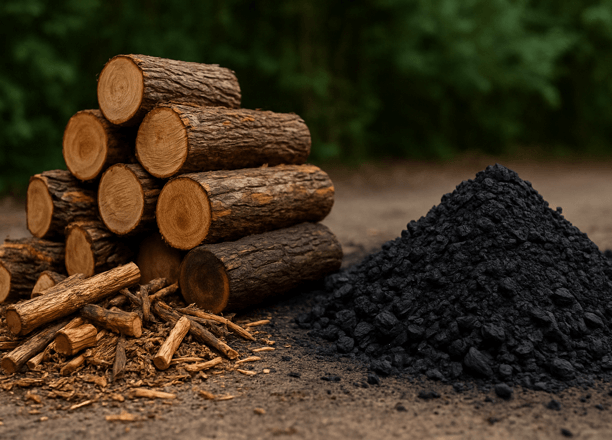
Wood-based biomass from sustainable forestry operations provides excellent feedstock for biochar. Our partners use only certified waste material from responsible forestry practices.

Key Benefits:
  • High lignin content for stable carbon
  • Consistent biochar properties
  • Suitable for premium agricultural applications
  • Reduces forest fire risks by removing deadwood
Bamboo Waste

Bamboo Waste

Bamboo's rapid growth and sustainable harvesting make it an ideal biomass source. Bamboo-derived biochar has excellent physical structure for soil applications.

Key Benefits:
  • Rapidly renewable resource
  • Creates highly porous biochar
  • Excellent for moisture retention
  • Carbon-negative lifecycle
Sugarcane Bagasse

Sugarcane Bagasse

Sugarcane bagasse, the fibrous residue after juice extraction, is abundant in sugar-producing regions. This biomass creates biochar with excellent water retention and nutrient-holding capacity.

Key Benefits:
  • Abundant in sugar-producing regions
  • High fiber content for stable structure
  • Excellent water retention properties
  • Converts agricultural waste to value
Wheat Straw

Wheat Straw

Wheat straw represents one of the most abundant agricultural residues globally. Converting this typically burned waste into biochar helps reduce air pollution while creating valuable soil amendments.

Key Benefits:
  • Globally abundant agricultural residue
  • Reduces harmful field burning practices
  • Creates lightweight, porous biochar
  • Good silicon content for plant health
Cotton Stalks

Cotton Stalks

Cotton stalks, left after harvest, provide excellent feedstock for biochar production. The woody structure creates biochar with good stability and moderate porosity suitable for various applications.

Key Benefits:
  • Utilizes post-harvest cotton waste
  • Woody structure for stable biochar
  • Moderate porosity for soil applications
  • Supports cotton farming regions
Maize Stover & Cobs

Maize Stover & Cobs

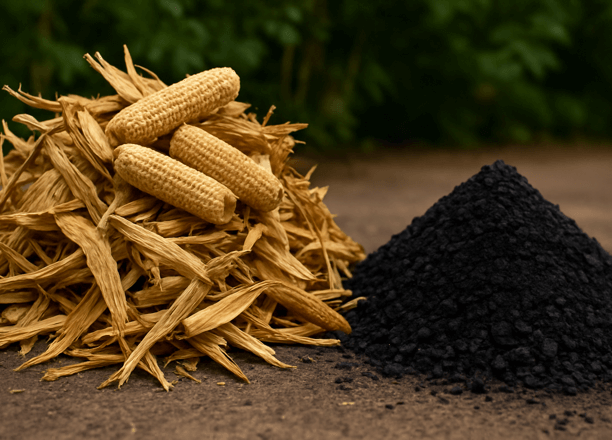
Corn stalks, leaves, and cobs provide excellent biomass diversity. The combination of fibrous stalks and dense cobs creates biochar with varied pore structures and good nutrient retention capacity.

Key Benefits:
  • Abundant in corn-growing regions
  • Varied structure creates diverse porosity
  • Good nutrient retention capacity
  • Reduces field residue management issues

Biomass Selection Criteria

Our manufacturing partners follow strict criteria for biomass selection to ensure both high-quality biochar production and sustainable environmental practices:

Moisture Content

Optimal moisture content between 10-15% for efficient pyrolysis

Chemical Composition

Low ash content and optimal carbon-to-nitrogen ratios

Local Availability

Preference for locally abundant materials to minimize transportation

Sustainability

Non-food competing, waste stream materials with minimal environmental impact

Production Methods

Various production technologies used by our partners to create biochar with specific properties

Retort Kiln Biochar

This premium production method uses controlled retort kilns to produce clean, consistent quality biochar in oxygen-limited chambers. This method allows precise temperature control between 450-700°C, resulting in biochar with high carbon content (75-90%) and excellent stability.

The retort design captures and reuses heat energy and combustible gases, making it one of the most energy-efficient and environmentally friendly production methods. The result is premium biochar with consistent properties, ideal for agricultural applications requiring high purity.

Key Benefits:
  • High carbon content (75-90%)
  • Consistent quality and purity
  • Excellent stability and longevity
  • Low contamination risk
Best For:
  • Premium agricultural applications
  • Soil remediation projects
  • Carbon sequestration initiatives
  • High-value crops and gardens

Open Pit Biochar (Traditional)

This traditional method produces biochar using earthen pits or mounds with limited oxygen control. While less controlled than modern methods, improved open pit techniques incorporate air flow management to improve consistency and reduce emissions.

Some of our partners employ this method primarily for community outreach programs, teaching smallholder farmers sustainable production techniques they can implement with minimal resources. The biochar produced has variable quality but remains beneficial for basic soil amendment applications.

Key Benefits:
  • Low-tech, accessible approach
  • Minimal equipment needed
  • Suitable for rural production
  • Knowledge transfer to communities
Best For:
  • Smallholder farming applications
  • Educational demonstrations
  • Community-based projects
  • Basic soil improvement needs

Kon-Tiki Kiln Biochar

The Kon-Tiki kiln represents a significant advancement in open-burning biochar production. This conical, open-top steel kiln design was inspired by traditional methods but engineered for improved efficiency, reduced emissions, and higher quality output.

Named after Thor Heyerdahl's Kon-Tiki expedition, this method creates a deep fire zone with a flame curtain that pyrolyzes biomass while minimizing smoke and capturing the biochar before full combustion occurs. The sloped walls create a natural air flow pattern that enhances pyrolysis conditions.

Key Benefits:
  • Moderate-scale production capability
  • Significantly reduced emissions
  • Lower investment than industrial systems
  • Excellent for farm-scale operations
Best For:
  • Medium-scale agricultural applications
  • Farm-based biochar production
  • Community-level sustainable initiatives
  • Diverse biomass feedstock utilization

Rotary Kiln Biochar

Industrial-scale rotary kiln systems allow continuous biochar production with high throughput and consistency. The rotating cylindrical chamber ensures uniform heat distribution and consistent residence time, resulting in biochar with highly predictable properties.

This method is ideal for large-scale commercial applications requiring substantial volumes of consistent quality biochar. The system's efficiency and automation make it a primary production method for export markets and large agricultural customers.

Key Benefits:
  • High production capacity
  • Excellent uniformity
  • Continuous operation
  • Efficient heat distribution
Best For:
  • Large-scale agricultural projects
  • Commercial greenhouse operations
  • Bulk export applications
  • Industrial uses requiring consistency

Gasifier Biochar

Gasification systems produce biochar as a byproduct of syngas generation. This dual-output process creates renewable energy while simultaneously producing fine, lightweight biochar with unique properties. The high-temperature process (800-1000°C) results in biochar with extensive microporosity.

The syngas produced can power the facility, creating a highly sustainable closed-loop system. The resulting biochar has excellent adsorption properties, making it ideal for environmental remediation and filtration applications.

Key Benefits:
  • Energy co-production
  • High surface area
  • Excellent adsorption capacity
  • Fine particle size distribution
Best For:
  • Water filtration applications
  • Pollutant removal
  • Specialized industrial uses
  • High-porosity applications

Pyrolysis Reactor Biochar

Advanced pyrolysis reactors operate in both continuous and batch modes, allowing precise control over temperature, residence time, and other critical parameters. This technology enables the engineering of biochar with specific characteristics tailored to customer requirements.

The automated control systems and data logging capabilities ensure reproducibility and traceability. This method is used for premium specialty biochar products where exact specifications are critical to performance.

Key Benefits:
  • Precise process control
  • Customizable properties
  • Complete production data
  • Highly reproducible results
Best For:
  • Research and development
  • Specialty applications
  • Custom formulations
  • High-value niche markets

The Production Process

From raw biomass to finished biochar products

1. Biomass Selection & Preparation

Our manufacturing partners carefully select and prepare the raw biomass materials, focusing on agricultural residues and sustainable forestry waste. The material is dried to optimal moisture content (typically 10-15%) and sized appropriately for the production method.

  • Moisture content optimization
  • Sizing through chipping or grinding
  • Contaminant removal
  • Quality inspection
Biomass Selection

2. Pyrolysis & Carbonization

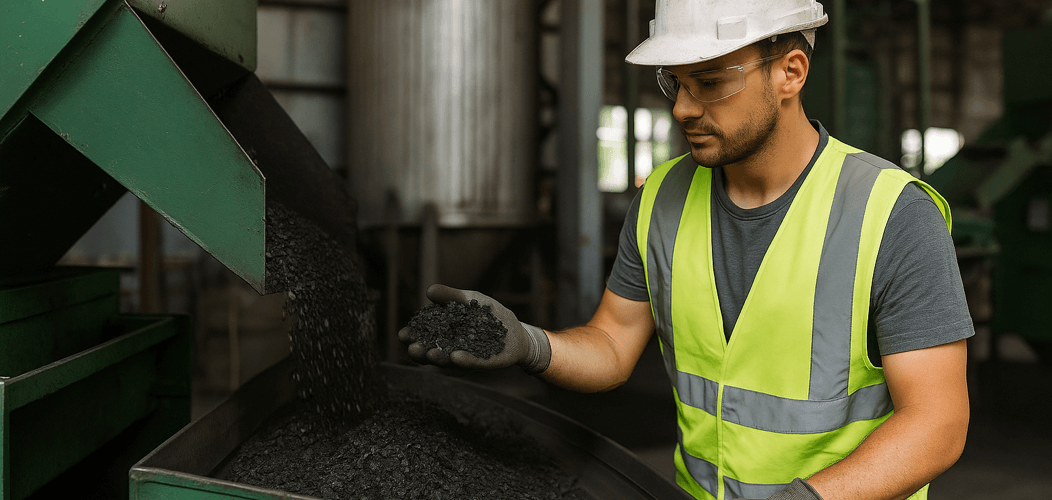
The prepared biomass undergoes controlled pyrolysis, where it's heated in a low-oxygen environment. This transforms the organic material into biochar by driving off volatile compounds while preserving the carbon structure.

  • Temperature control (450-700°C)
  • Residence time management
  • Oxygen limitation
  • Process monitoring
Pyrolysis Process

3. Cooling & Stabilization

The hot biochar is carefully cooled in a controlled environment to prevent combustion while preserving its valuable properties. This stage is critical for safety and product stability.

  • Temperature reduction
  • Oxygen management
  • Secondary reactions control
  • Heat recovery for efficiency
Cooling Process

4. Post-Processing & Refinement

The cooled biochar undergoes various post-processing steps to achieve desired specifications. This may include crushing, screening, washing, or activation depending on the intended application.

  • Size classification
  • Contaminant removal
  • Optional activation
  • Blending for specific formulations
Post-Processing

5. Quality Testing

Every batch undergoes comprehensive testing to ensure it meets our stringent quality standards and customer specifications. We analyze physical, chemical, and performance characteristics before accepting it for distribution.

  • Carbon content measurement
  • Surface area analysis
  • pH and electrical conductivity
  • Contaminant screening
  • Functional performance testing
Quality Testing

6. Packaging & Distribution

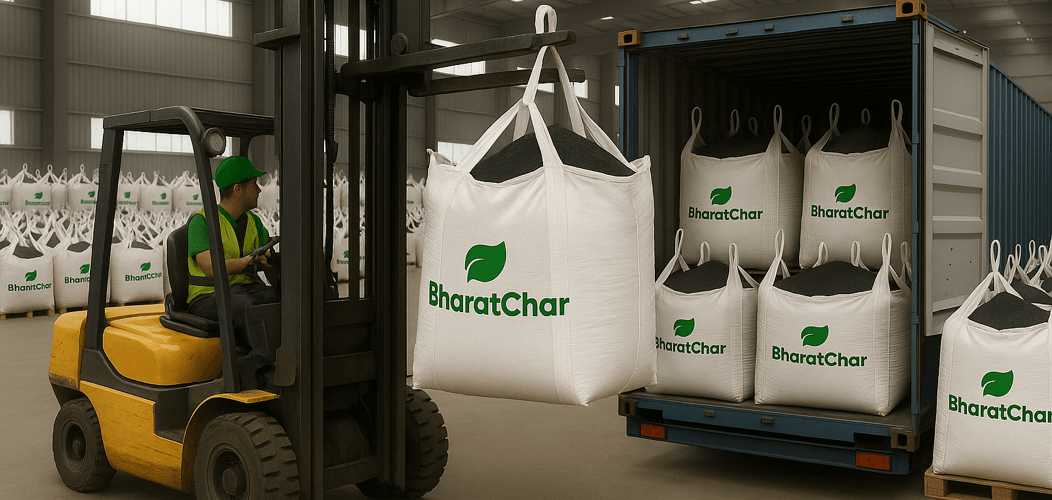
The finished biochar is packaged according to customer requirements, from bulk containers to retail-ready bags. Our logistics team ensures efficient and reliable delivery worldwide.

  • Multiple packaging options
  • Moisture-controlled storage
  • Batch tracking and documentation
  • Global logistics coordination
Packaging Process

Quality Control & Certification

Our commitment to excellence in every product we distribute

Testing Standards

We require all biochar products to undergo comprehensive testing before accepting them for distribution. From carbon content and pH to surface area and contaminant analysis, we ensure thorough quality verification.

Key Tests:
  • Carbon content (ASTM D3172)
  • Surface area (BET method)
  • pH and electrical conductivity
  • Bulk density and particle size distribution
  • Heavy metals and PAH screening

Certification Standards

We ensure all biochar products we distribute meet or exceed major international biochar standards and certifications, guaranteeing consistent quality and safety for all applications.

Required Certifications:
  • European Biochar Certificate (EBC)
  • International Biochar Initiative (IBI) Standards
  • USDA Organic Compliant
  • ISO 9001:2015 Quality Management
  • ISO 14001:2015 Environmental Management

Partner Selection

Our rigorous partner selection process ensures we work with only the most reliable and high-quality biochar manufacturers who share our commitment to sustainability and excellence.

Selection Criteria:
  • Production facility inspection
  • Product quality and consistency testing
  • Environmental practices evaluation
  • Production capacity assessment
  • Sustainability and social responsibility
Future Plans

Our Upcoming Manufacturing Facility

BharatChar is planning to establish our own dedicated biochar production facility by the end of 2026.

While we currently work with a network of trusted manufacturing partners to source our high-quality biochar products, we're excited to announce our plans to develop our own state-of-the-art production facility. This vertical integration will allow us to further control quality standards and expand production capacity to meet growing global demand.

Advanced Technology

Incorporating the latest pyrolysis and processing equipment

Sustainability Focus

Designed for minimal environmental impact and maximum energy efficiency

Research & Development

Integrated R&D lab to drive biochar innovation

Facility Development Timeline

2025 - Q3/Q4

Site selection and environmental impact assessment

2026 - Q1

Facility design and regulatory approvals

2026 - Q2/Q3

Construction and equipment installation

2026 - Q4

Commissioning and initial production

Interested in Our Production Capabilities?

Contact our team to discuss your specific biochar needs or to learn more about our manufacturing partners.